


With so much focus on wedding planning—venues, guest lists, outfits, and every detail—many couples aim to make their big day unforgettable. But preparing for marriage takes even more effort. Premarital counselling gives couples a supportive space to build a strong foundation, improve communication, and start their life together with clarity and confidence.
This guide explains what happens in premarital counselling sessions and offers practical tips for finding the right support. Whether you just got engaged or your wedding is coming up soon, see how taking this step can help your relationship grow stronger.
Understanding Premarital Counselling

Premarital counselling connects engaged couples with a trained therapist for a series of focused sessions over several weeks. Instead of just looking at problems, it highlights your strengths as a couple and gives you tools to handle real-life challenges. You’ll talk about everyday topics like household roles, as well as deeper subjects like values, expectations, and shared dreams.
The counsellor helps both partners feel heard and understood, without judgment. Through guided discussions, you’ll see how your backgrounds shape your views on money, family, and intimacy. By talking about these topics together, couples clear up misunderstandings and become better prepared for marriage, just as wedding planning prepares you for the big day. To understand how this proactive approach differs from therapy later in life, you can read about Premarital Counselling vs Couples Counselling: Preventive Vs Remedial.
What Are the Goals of Premarital Counselling?
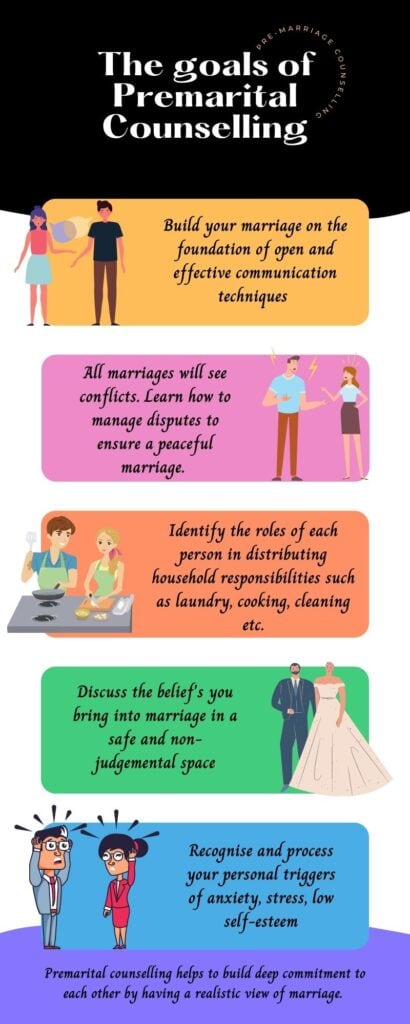
Premarital counselling is an effective tool to transition to a smoother married life. It helps to improve your communication and conflict management skills to help increase your overall relationship satisfaction and quality.
Premarital counselling helps to build deep commitment to each other by having a realistic view of marriage.
Premarital counselling can last from a few weeks to a few months. Your relationship will determine how long you need premarital counselling. It is wise to work through existing conflicts before getting married in some cases.
Couples may have different goals for pre-marriage counselling, but some common ones include:
- Build your marriage on the foundation of open and effective communication techniques
- All marriages will see conflicts. Learn how to manage disputes to ensure a peaceful marriage.
- Identify the roles of each person in distributing household responsibilities such as laundry, cooking, cleaning etc.
- Discuss the belief’s you bring into marriage in a safe and non-judgemental space.
- Identify the concern you may have with regards to marriage and openly discuss them.
- Talk about tricky topics that you may want to sweep below the carpet, like managing finances,
- intimacy,
- children,
- managing parents.
- Resolving recurring arguments in your relationship
- Recognise and process your personal triggers of anxiety, stress, low self-esteem, etc.
Every couple experiences pre-marriage counselling differently. As a couple, you and your therapist can work on finding solutions that suit your personalities, lifestyles, and goals.
Counsellors, marriage and family therapists, and psychotherapists may approach premarital counselling differently. Still, the goal remains the same: to enable you and your partner to have the conversations and develop the skills you need before entering into a lifelong marriage.
Inside the Sessions: What Really Happens
Sessions are welcoming and collaborative, helping to ease any worries about judgment or conflict. In the first meetings, you’ll share how you met, what brought you together, and what excites you about marriage. This helps set a safe and positive tone.
After that, guided discussions focus on important topics. Communication is a key part—you’ll practice sharing your needs in a gentle way, such as saying, “I feel overlooked when plans change last-minute.” These exercises show how each partner handles tension. One person might need space, while the other wants quick reassurance, helping you both adapt.
Important life topics come up naturally, like finances (budgeting, family support), family dynamics (boundaries with in-laws, where to live), children (when to have them, parenting ideas), balancing careers, and intimacy (emotional and physical needs). The counsellor helps guide these talks and notices any unspoken beliefs from your upbringing or culture.
In later sessions, you’ll work on building a shared vision for your marriage. You might start habits like weekly check-ins or regular date nights, and get simple activities to try at home. These exercises help you use what you learn in daily life. Most couples leave feeling more connected, confident, and ready to face challenges together.
How to Choose Your Counsellor
Choosing the right counsellor is a vital step in preparing for your future together. Since every relationship has its own rhythm, you should look for a professional who has specific experience working with engaged couples and understands the modern pressures of balancing career goals with family life.
In a general or urban setting, you might consider these factors when selecting your support:
- Cultural Competence: Look for someone who understands your specific background, whether that involves navigating the expectations of extended family or managing the fast-paced demands of your professional lives.
- The “Vibe” Check: A short introductory call is a great way to see if the counsellor listens well and makes both of you feel comfortable and heard.
- Methodology: Ask if they use a structured approach with workbooks for topics like budgeting and conflict, or if they prefer more fluid, open conversations.
- Logistics: Confirm the practical details, such as session length, meeting frequency, and whether they offer the flexibility of online sessions or the intimacy of in-person meetings.
- Sourcing Recommendations: You can often find highly rated professionals through local wellness centers, community boards, or even wedding planning networks.
The ultimate goal is to find a guide who leaves you both feeling motivated and equipped to grow as a team.
What to Discuss with Your Counsellor?
- Understanding each other’s marriage expectations

Halfway through the second session of ‘pre-marriage counselling’, the therapist asked Jill if she agreed with James that she would be doing most of the work about bringing up their children. Jill immediately replied, “Hold on, no way. I expect both of us to take up equal responsibility. I am not willing to give up my job.”
She was surprised to hear James expectations that came from his early childhood experiences and his belief that children need a full-time mother tending to their needs.
A therapist then mediated a heated discussion about expectations and assumptions. Finally, the couple discussed their beliefs about children and worked on them till both were happy with their expectations.
Imagine having this conversation after marriage, and instead of changing the spoilt bulb, you may end up changing the house!!
- The Past you bring into your marriage.

Many couples seek help later through Marriage Counselling because their past interferes with their present. I had a couple who came because his wife could not let go of her suspicious nature. Her father had several extramarital affairs, which impacted her belief that her husband would also cheat on her.
Premarital counselling helps to air some of the childhood issues, and if healing is required, the counsellor will also meet the couple individually or refer them for individual counselling.
- Learn to Resolve Conflicts in Marriage
“I am like that, and I cannot change”. Well, this is a definitive statement I hear. However, premarital counselling helps recognise our defence coping mechanism, learn to be vulnerable, and discuss topics however challenging they may be. The foundation to a successful marriage is having open conversations and the ability to resolve conflicts.
- Financial Management Skills

I have had couples who come and say they are poor financial planners, or they hide their finances from each other etc. Money can be an essential ingredient in keeping the marriage alive or ruining it.
Every person has a unique relationship with money. There is no right or wrong.
In premarital counselling, you will discuss your beliefs around finances and lay it open for mediation from your counsellor in a safe and non-judgemental environment. A couple can avoid this typical relationship snag by understanding each other’s money stories, past and present financial histories, and shared future goals and intentions.
- Intimacy

It is a well-known fact that intimacies are highly personal, and most marriages encounter intimacy problems.
Even though it might be uncomfortable to talk about your sex life in front of a stranger, understanding the general physiological and emotional gender differences, as well as those specific to [you], can open up the possibility of shaping a healthy physical relationship.
- Issues surrounding family
“I don’t want to stay with your parents”, “I want a house of my own”, “I do not want children”, “I want my child to follow my religion”.
There are so many beliefs around family you bring to the marriage. If they are not discussed openly, they can create unimaginable wounds and break-ups. Premarital counsellors facilitate couples to understand and define the issues and their beliefs around family and children. It leaves them and their marriage better prepared.
Everyday Practices to Start Today
You can start building good habits even before formal sessions. Set aside time each week to talk about one topic, like “What support do you need when you’re stressed?” Listen carefully and repeat back what you hear. Try journal prompts such as “What makes you feel most loved?” and share your answers. To reduce tension, agree on a signal to pause and have a calm conversation.
These habits reflect what you’ll do in counselling and help strengthen your relationship from the very beginning.
Stories That Bring It to Life
- Wei Ting and Jia Hao, who were introduced through a mutual family friend, initially worried about being vulnerable or appearing “weak” to one another. Counselling helped them move past the logistics of their BTO (Build-To-Order) flat application to discover shared travel dreams and address long-term financial goals. This open dialogue built deep trust before their wedding day.
- Siti and Daryl, coming from different cultural and religious backgrounds, used guided sessions to navigate how they would blend their respective holiday traditions and family customs. By discussing these expectations early, they turned potential tension over “who to visit when” into a sense of unity and mutual respect.
In both stories, choosing to seek early understanding through premarital counselling led to a foundation of strong confidence for their future together.
Your Path Forward
Put as much care into your relationship as you did into planning your wedding. Share this guide with your partner and talk about one expectation today. Start building your future together now.
Reference:
- Is Premarital Counseling Right for You? – Verywell Mind