


Grief & Bereavement Counselling Singapore
Home > Counselling Services > Grief Counselling
Finding Comfort and Healing After Loss
Grieving is a deeply personal journey; there is no “right” way to move through it. Whether you are mourning the death of a loved one, the loss of a pet, a miscarriage, a divorce, a serious health diagnosis, or even a career you worked hard to build, your pain is valid and you deserve support. At Insightful Counselling Singapore, we offer professional grief, bereavement, and loss counselling for adults, teenagers, and children, helping each person navigate their unique experience with compassion and without judgment. Loss does not follow a timeline, and neither does healing. Whether your grief is fresh or has been carried quietly for years, our goal is to help you find comfort, rebuild emotional balance, and take gentle steps toward peace, at your own pace.
What is Grief Counselling, and How Can It Help?
Grief counselling is a therapeutic process that helps individuals cope with the emotional, physical, and psychological effects of loss. It provides a confidential space to explore your feelings openly and find meaningful ways to move forward — without being told to simply “get over it” or “move on.”
Emotional Support: Grief counselling offers a compassionate space to express emotions freely, without fear of judgment.
Coping Strategies: Counsellors help you develop healthy coping mechanisms tailored to your situation and personality.
Whole-Person Healing: Therapy aids in navigating the complexities of grief, addressing both the emotional pain and the physical toll that loss can take on the body.
How Does Bereavement Counselling Differ from General Therapy?
While general therapy addresses a wide range of mental health concerns — anxiety, depression, relationships — bereavement counselling is specifically designed around the grief process. Sessions focus on helping you process the emotional shock of loss, work through guilt or anger, and find ways to carry the loss forward without being consumed by it.
Focused Approach: Bereavement counselling is targeted specifically at the challenges of loss — not a one-size-fits-all approach.
Specialised Techniques: Our therapists are trained in grief-specific modalities including EMDR, Brainspotting, and Complicated Grief Therapy, which go beyond talk therapy to address grief held in the body and nervous system.
Supportive Environment: Sessions are designed around your bereavement needs — the pace, the topics, and the approach are led by you.
What Can I Expect During a Grief or Loss Counselling Session?
In your first session, your counsellor will gently invite you to share what brings you in. There is no pressure to have everything figured out, and you will not be pushed to discuss anything before you are ready. Sessions typically last 50 minutes and are held in a private, confidential setting at our Raeburn Park office or securely online via Zoom.
Personal Sharing: You can openly share your thoughts and feelings about your loss in a safe, confidential space.
Therapeutic Techniques: Your counsellor will draw on therapeutic techniques suited to your needs from talk therapy and mindfulness to EMDR and Brainspotting.
Confidential Space: Everything shared in sessions remains strictly private and confidential, in a non-judgmental environment.
What Are the Stages of Grief Cycle?
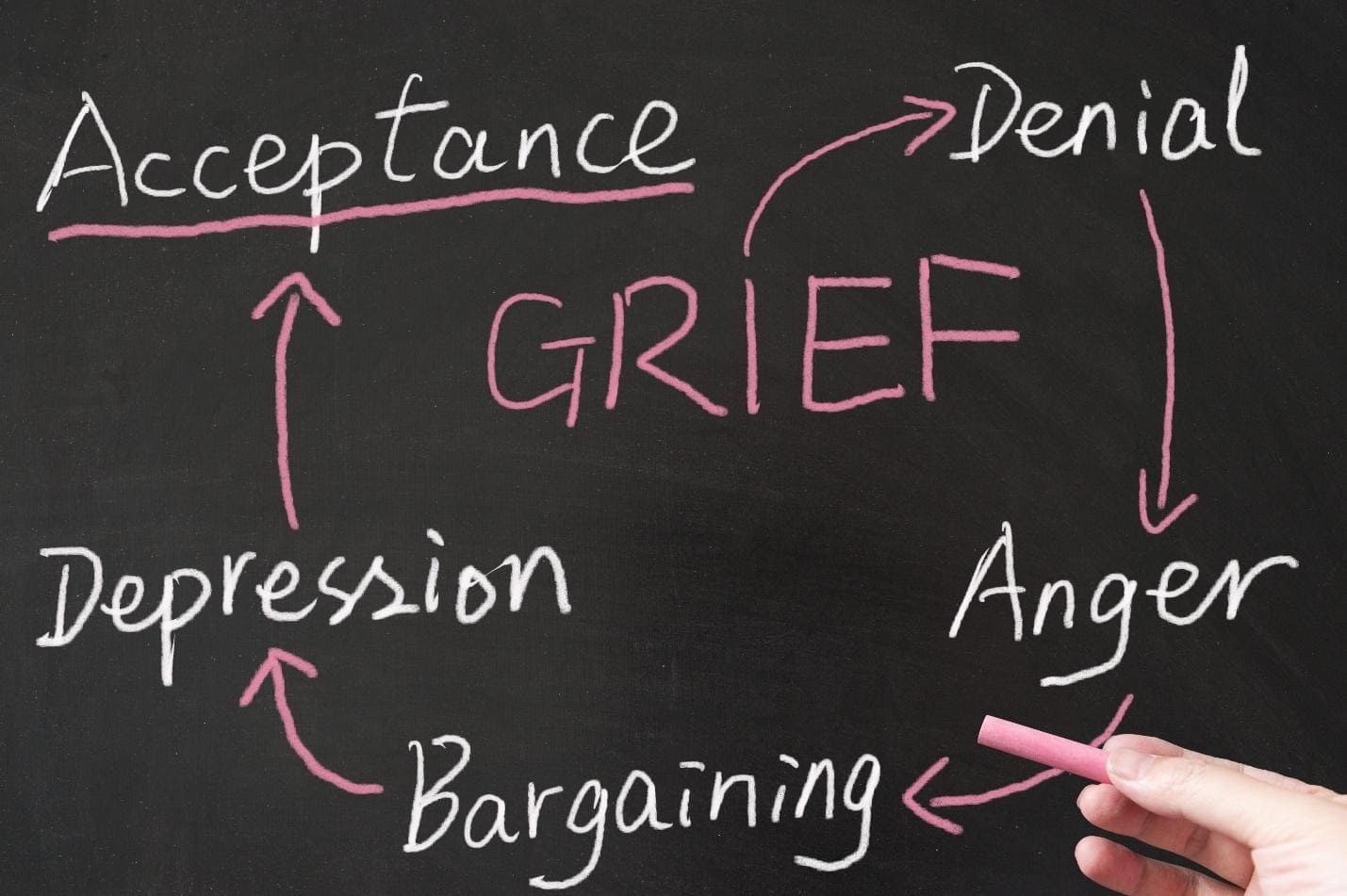
The stages of grief, commonly known as the Kübler-Ross model, include denial, anger, bargaining, depression, and acceptance. Understanding these stages can help you recognise that your emotions are a normal part of grieving.
Denial: The first reaction to loss is often shock and disbelief — a protective response.
Anger: Frustration and helplessness can surface as anger directed at others, yourself, or the situation.
Bargaining: Trying to find meaning or to negotiate a way to reverse or undo the loss.
Depression: Deep sadness and the full realisation of the extent of what has been lost.
Acceptance: Coming to terms with the loss and finding new ways to move forward with meaning.
It is important to note that grief is not a linear process. You may move between these stages, revisit some multiple times, or not experience all of them — and that is completely normal. There is no correct order, and no deadline.
Types of Loss We Support
Grief is not limited to the death of a loved one. At Insightful Counselling, we support clients through all forms of significant loss, including:
Death of a loved one — spouse, parent, child, sibling, or close friend
Pregnancy loss, miscarriage, and termination for medical reasons
Pet loss and animal bereavement
Grief after divorce or separation
Job loss, career transitions, and retirement
Grief following a serious health diagnosis — for yourself or a loved one
Suicide bereavement — losing someone to suicide
Anticipatory grief — grieving before a loss occurs (e.g. a terminal diagnosis)
Disenfranchised grief — losses that others may not recognise as valid, such as the end of a friendship or estrangement
Every loss is valid. If something has profoundly changed your life, you deserve a space to process it.
How Can Understanding the Grief Cycle Help in Healing?
Understanding the grief cycle can offer valuable insights into your emotional responses and help you navigate your experience with greater self-compassion. It provides a framework for recognising and validating your feelings — so you stop asking “what is wrong with me” and start understanding that what you are going through is a deeply human response to loss.
Insight into Emotions: Helps you understand and validate your feelings rather than suppressing or judging them.
Navigational Tool: Provides a roadmap for what you might experience, reducing the fear that your emotions are out of control.
Coping Mechanism: Knowing the stages helps you and your counsellor develop targeted strategies for each phase of grief.
What Techniques Are Used in Grief and Bereavement Counselling?
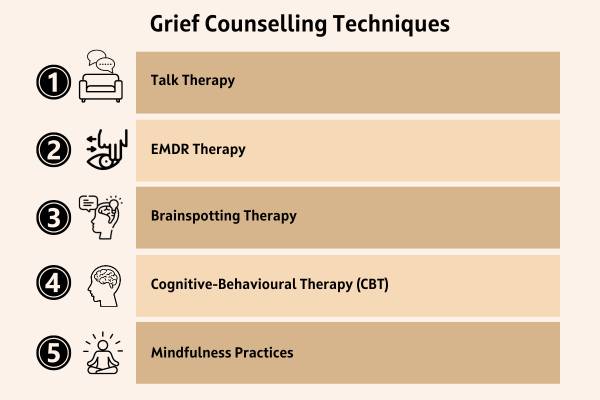
Grief and bereavement counselling at Insightful Counselling incorporates a range of evidence-based techniques tailored to your individual needs. No single approach works for everyone — your counsellor will work with you to find what fits.
Talk Therapy: Provides a space to talk openly about your feelings, memories, and experiences at your own pace.
EMDR Therapy: Eye Movement Desensitisation and Reprocessing helps process grief and trauma-related memories, particularly useful after sudden or traumatic loss.
Brainspotting Therapy: Targets specific neurological points related to emotional distress, helping to release grief that feels stuck in the body.
Cognitive-Behavioural Therapy (CBT): Identifies and gently challenges unhelpful thought patterns that can keep grief from moving forward.
Mindfulness Practices: Encourages present-moment awareness to manage overwhelming waves of emotion.
Complicated Grief Therapy (CGT): A structured therapeutic approach specifically designed for those experiencing prolonged or complicated grief.
How Long Does Grief Counselling Typically Last?
The duration of grief counselling varies depending on individual needs and circumstances. There is no fixed timeline; every person processes loss differently and at their own pace.
Individual Needs: As a general guide, many clients begin to notice meaningful shifts within 6 to 10 sessions. The length depends entirely on your situation, the nature of the loss, and how you are feeling as sessions progress.
Short-Term Relief: Some people find significant relief and practical coping strategies within a shorter number of sessions.
Long-Term Support: Others dealing with complicated grief, traumatic loss, or longstanding bereavement may benefit from longer-term, ongoing support.
Your counsellor will discuss a personalised plan with you during your first session, one that respects your pace and budget.
Can Grief Counselling Help with Long-Term Grief and Loss Issues?
Yes. Grief does not have an expiration date, and many people carry unresolved losses for years — sometimes decades — before seeking support. Grief counselling can be highly effective for long-term or delayed grief, helping you finally process emotions that have been suppressed or pushed aside.
Ongoing Support: Offers continuous help to manage grief that has persisted or resurfaced over time.
Unresolved Emotions: Assists in processing emotions — including guilt, regret, and unresolved anger — that linger long after the loss.
Coping Strategies: Helps you develop effective, sustainable ways to integrate the loss into your life and move forward with meaning.
How Do I Know If I Need Professional Help for Grief and Bereavement in Singapore?
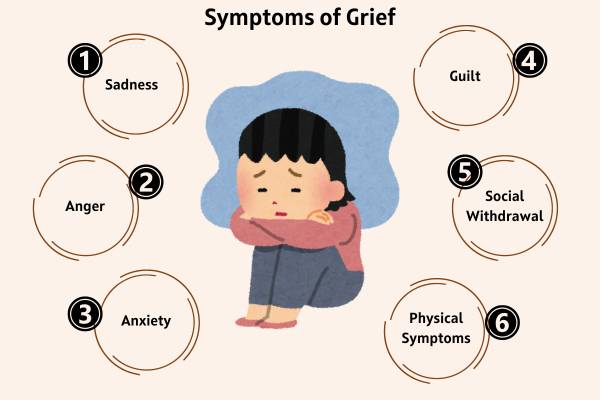
If you are finding it difficult to manage your emotions, experiencing prolonged grief symptoms, or struggling to carry out daily activities following a loss, professional support can make a meaningful difference. You do not need to wait until you reach a breaking point; reaching out early is a sign of strength, not weakness.
Emotional Struggles: Persistent sadness, numbness, anger, or guilt that feels unmanageable may be a sign that support would help.
Prolonged Symptoms: If symptoms have lasted for many months without easing, grief counselling can provide the structure and tools to begin healing.
Daily Activities: When grief is affecting your work, relationships, sleep, appetite, or ability to function day to day, it is time to seek help.
Grief Counselling for Children and Teens
Grief looks different for young people than it does for adults. Children and teenagers may not always have the words to describe their feelings, so their grief can show up in behaviour changes, school struggles, or even physical complaints like stomach aches and headaches. They may appear fine one moment and overwhelmed the next.
How Counselling Helps Children
Provides a safe and supportive space to talk about loss in age-appropriate ways.
Uses play therapy, art, and storytelling to help younger children express feelings they cannot yet put into words.
Helps children understand that their emotions are normal and that they are not alone.
Builds coping skills so they can manage sadness, anger, or confusion in healthy ways.
Where appropriate, we can liaise with your child’s school counsellor to ensure consistent support across home and school environments.
Offers a judgement-free space where teens can talk openly without worrying about burdening their family.
Addresses feelings of isolation, anger, guilt, or withdrawal that can surface during adolescence.
Teaches emotional regulation and stress management strategies such as mindfulness and CBT-based tools.
Supports identity development and resilience during a stage of life already full of change.
Why It Matters
Unprocessed grief in childhood or adolescence can sometimes lead to long-term challenges, including anxiety, depression, academic difficulties, or struggles in relationships. Early grief counselling helps children and teens build emotional resilience, giving them healthier ways to cope with loss throughout their lives.

How Can Insightful Counselling Help with Grief and Bereavement?
At Insightful Counselling, our experienced counsellors offer compassionate, personalised support to help you navigate grief at your own pace. We use evidence-based techniques, including approaches for complicated grief and life transitions, to help you process emotions and move toward healing.
Compassionate Support: We walk alongside you with empathy and understanding throughout your grief journey.
Personalised Approach: Your counselling sessions are tailored to your unique needs—whether you’re facing recent loss, long-term grief, or major life transitions.
Evidence-Based Techniques: We use proven methods such as CBT, mindfulness, EMDR, Complicated Grief Therapy, and Loss & Life Transition Support to help you integrate the loss and rebuild emotional balance.
Takeaway
Grief does not have an expiration date, and healing rarely moves in a straight line. But with the right support, many of our clients find that they are able to carry their loss with greater ease — not by forgetting, but by integrating it into their life in a way that allows them to move forward. Through grief counselling at Insightful Counselling, you can expect to:
- Feel less overwhelmed by waves of sadness, guilt, or anger
- Develop healthy coping strategies that work for your life
- Process unresolved emotions in a safe, confidential space
- Rebuild a sense of meaning, identity, and hope after loss
- Learn to honour what you have lost while gently moving forward
Meet Our Grief & Bereavement Counsellors in Singapore

Mhairi Jerga, MSc (Counselling): She meets you with empathy and patience, whether you are an adult, teen, or child experiencing grief. She gently helps you explore emotions, manage anxiety or sadness, and develop coping tools to move through transitions with hope and strength.

Known for her calm and nonjudgmental demeanour, Yap Huay Khem equipped herself with various modalities, such as EMDR/Flash Technique, Brainspotting, Hypnotherapy, and Transactional Analysis, to help clients to explore, aware and resolve their trapped issues and emotions, thus improve their well-being and handling behaviours.
Insightful Counselling Case Studies for Grief
Success Case Study: Grief Counselling with Helen
Background
Helen (Not real name to maintain confidentiality), a 34-year-old woman, was faced with an incredibly difficult situation when she learned that her unborn child had a severe medical condition. After extensive consultations with medical professionals, Helen and her partner had to make the heartbreaking decision to terminate the pregnancy for medical reasons. The emotional toll of this experience was profound, leaving Helen with overwhelming grief, guilt, and a sense of loss.
The Initial Consultation
When Helen first came to grief counselling, she was struggling to cope with her emotions. She felt immense guilt for making the decision to end the pregnancy and was haunted by thoughts of what could have been. She also experienced feelings of isolation, believing that others could not truly understand her pain. Helen expressed a deep sense of loss and was unable to find solace or peace.
Goals of Counselling
- Validate Helen’s Emotions: Help Helen understand that her feelings of grief, guilt, and loss were valid and normal.
- Provide a Safe Space: Create a supportive environment where Helen could express her emotions without fear of judgment.
- Develop Coping Strategies: Equip Helen with tools and techniques to manage her grief and begin the healing process.
- Address Guilt: Work through Helen’s feelings of guilt and help her find a sense of peace and acceptance.
The Counselling Process
In the initial sessions, the counsellor focused on building a trusting relationship with Helen, encouraging her to share her story and express her emotions freely. As trust developed, they delved deeper into Helen’s feelings of guilt, helping her understand that her decision was made out of love and necessity. The counsellor introduced various coping strategies, including mindfulness exercises, journaling, and guided imagery, to help Helen manage her grief and regain control over her life. As Helen progressed, the sessions shifted towards finding acceptance and peace, with activities like creating a memory box and writing letters to her unborn child, allowing Helen to honor her loss meaningfully.
Outcome
After several months of counselling, Helen experienced significant improvements in her emotional well-being. She no longer felt overwhelmed by guilt and was able to talk about her experience without breaking down. Helen reported feeling a sense of lightness and peace that she hadn’t felt since the loss of her pregnancy. She found comfort in the memories of her baby and was able to move forward with a sense of hope.
Conclusion
Helen’s journey through grief counselling with her therapist highlights the importance of professional support in the healing process. By providing a safe and empathetic environment, validating her feelings, and equipping her with effective coping strategies, her counsellor helped Helen navigate through her grief and find a path to acceptance and peace. This case study demonstrates the profound impact that compassionate counselling can have on individuals experiencing traumatic loss.
Our Videos
Grief Counselling in Singapore — In-Person & Online
Book an Appointment
If you’re struggling with grief and loss, we are here to help. Take the first step toward healing today. Please fill out the form below to book an in-person session at Raeburn Park or an online counselling via Zoom, and our team will reach out to connect you with a specialised counsellor.
Frequently Asked Questions
Yes, grief counselling can be especially beneficial for those who have experienced sudden or traumatic loss by providing a space to process complex emotions and trauma in a supportive environment.
While general therapy addresses a broad range of mental health concerns, bereavement counselling focuses specifically on the emotional and physical impact of loss. We use specialised techniques like EMDR and Brainspotting to help you process traumatic memories associated with the loss, helping you move from a state of overwhelm to one of gentle acceptance.
Yes. Grief affects the whole body, not just the mind. Physical symptoms of grief can include fatigue, disrupted sleep, changes in appetite, chest tightness, headaches, a weakened immune system, and even heart palpitations. This is sometimes referred to as “broken heart syndrome.” If you are experiencing physical symptoms following a significant loss, speaking with both your doctor and a grief counsellor is advisable. Counselling can help reduce the emotional burden that is manifesting physically.
Yes, absolutely. Grief isn’t limited to the death of a loved one. Many of our clients seek grief therapy in Singapore for ‘disenfranchised grief’—the pain felt after a major life change that others might not see as ‘traditional’ loss. Divorce counselling is a major part of this; ending a marriage is the death of a partnership and the future you had envisioned. Whether it’s a career transition, a health diagnosis, or a marital split, every loss is valid and deserves a dedicated space to be heard and healed.
We believe in transparency when it comes to the cost of mental health support. Our professional fees for individual grief counselling sessions typically range from $150 to $230 for sessions with our senior therapists. You can find a full breakdown on our Fees Page.
You can reach us directly via WhatsApp at +65 8328 7060 to inquire about availability or book an appointment. Alternatively, you can fill out the form on our Contact Page or email us at info@insightfulcounselling.com. We are located at 10 Raeburn Park, near Outram Park MRT, and also offer secure online sessions.
Consider their qualifications, counselling style, and client reviews to ensure they align with your needs. In Singapore, many counsellors specialize in helping individuals navigate loss, process emotions, and rebuild their lives. The right bereavement counselling in Singapore can offer structured guidance to help you cope with grief in a healthy and meaningful way.
Not at all. Grief doesn’t have an expiration date. Many people in Singapore seek support for delayed grief years after a loss occurs, often triggered by a life milestone or an anniversary. Whether your loss was yesterday or a decade ago, our therapists are here to help you navigate those “waves” of emotion whenever they arrive.
Healing is non-linear, so the number of sessions varies. Some clients find relief and coping strategies within 6 to 8 sessions, while others prefer long-term support to process complex trauma. During your first session at Insightful Counselling, we will discuss a personalised plan that respects your pace and budget.
Yes. Children express grief differently than adults—often through behaviour or play. Our specialised youth counselling in Singapore uses age-appropriate techniques to help younger family members understand and express their feelings in a safe, supportive environment.
Yes, absolutely. The grief that follows the loss of a beloved pet is real and can be just as profound as any other form of bereavement. Unfortunately, pet loss grief is often minimised socially, sometimes called “disenfranchised grief”, which can make the pain feel even more isolating. At Insightful Counselling, we provide a judgment-free space to grieve your pet and process the unique bond you shared.
We understand that during deep grief, even leaving the house can feel like a monumental task. We offer secure online counselling via Zoom, allowing you to speak with a professional from the comfort of your own home in Singapore. When you feel ready, you can always transition to in-person sessions at our Raeburn Park office.
If you or someone you know is struggling with grief, bereavement, or loss, please do not hesitate to contact Insightful Counselling. Click ‘make and appointment’ now. We are here to provide the support and guidance you need during this difficult time.
Testimonials
Reena provided a supportive environment that encouraged me to open up and face my profound pain and sense of loss. She created a safe space where I could express my emotions without fear of judgment, allowing me to unburden my grief. Reena's presence and support as I reflected on my relationship with my husband were invaluable. This process helped me understand and release my pain, making way for me to cherish the beautiful memories and the love we shared once more.
Huay Khem is incredible! She made me feel truly understood and validated, like I genuinely mattered. Her way of speaking and her ability to see deep into your eyes and understand you is remarkable. I felt completely safe while we worked through my unresolved grief. Now, I have a newfound lightness in my life. Everyone should experience this kind of support!
Adeeti, is very patient, non-judgemental and empathic. She has been helping me overcome my struggles and also enable me to identify my strengths. She also helped to point out my irrational thoughts and guide me back on track. My family members also notice I had become more positive. Feeling grateful to Adeeti for her help.
- I am in my twenties and even though it is commonly known as a confusing time in life for many, I struggled with adapting, deteriorating my mental health. After many months of deciding to take on therapy, I took my first step and called insightful counselling. My counsellor Lily is extremely patient and gentle, taking the time to understand and work out my complex emotions and guiding me through exercises which I can practise at home to help me cope. I highly recommend Insightful and Lily's sessions to anyone, even if you just need a listening ear!