
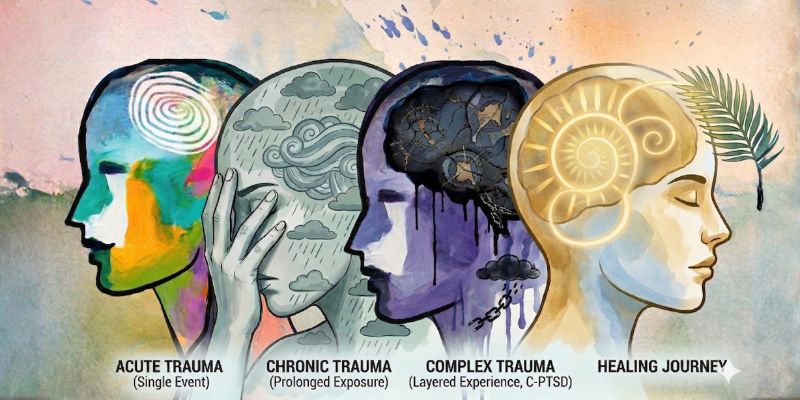
Life has a way of throwing unexpected challenges at us. Sometimes, these experiences leave deep emotional wounds that don’t heal on their own. If you’ve been feeling stuck, anxious, or overwhelmed by past events, you’re not alone. According to a study published in the Journal of Clinical Psychology (2014), approximately 90% of people experience at least one traumatic event during their lifetime. Here in Singapore, research from the Singapore Mental Health Study (2020) shows that 64% of us have dealt with adverse childhood experiences. Understanding the different types of trauma and how professional trauma counselling can support your healing journey is the first step toward reclaiming your peace.
What Is Trauma, Really?
Trauma isn’t just about what happened to you—it’s about how that experience overwhelmed your ability to cope. It’s the emotional response to deeply distressing events that leave you feeling unsafe, helpless, or fundamentally changed. What makes an experience traumatic varies from person to person. What might be manageable for one individual could be devastating for another, and that’s completely valid.
When we experience trauma, our brain’s natural alarm system gets stuck in the “on” position. You might find yourself constantly on edge, reliving painful memories, or avoiding anything that reminds you of what happened. These aren’t signs of weakness—they’re your mind’s way of trying to protect you from future harm.
The Three Main Types of Trauma
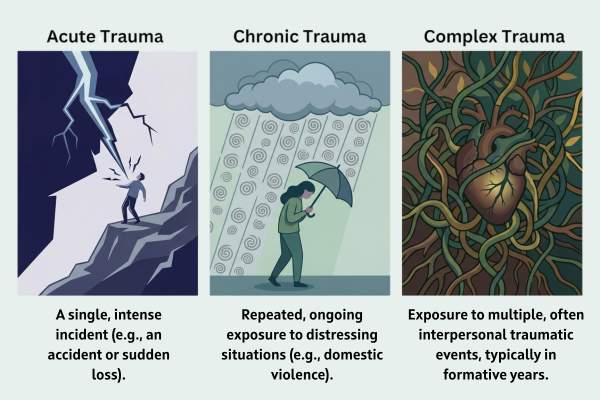
Understanding which type of trauma you’ve experienced can help you and your therapist develop the most effective treatment plan.
Acute Trauma: The Single Devastating Event
Acute trauma stems from a single, distressing incident that happened suddenly and intensely. Think of events like a car accident, a natural disaster, a sudden loss of a loved one, or a physical assault. These experiences often leave you feeling shocked and vulnerable.
While the event itself may have been brief, the psychological impact can linger for weeks, months, or even years. Many people with acute trauma experience flashbacks, nightmares, and intense anxiety when reminded of the incident. The good news? With timely intervention through trauma therapy in Singapore, many individuals can fully recover.
Common symptoms include:
- Intrusive memories or flashbacks
- Difficulty sleeping or concentrating
- Feeling emotionally numb or detached
- Avoiding places or people that remind you of the event
- Heightened startle response
Chronic Trauma: When Pain Becomes Prolonged
Chronic trauma results from repeated, ongoing exposure to distressing situations over weeks, months, or years. This might include experiences like domestic violence, workplace bullying, long-term illness, or ongoing abuse.
This type of trauma often appears much later, sometimes years after the events, manifesting as unpredictable emotional outbursts, extreme anger, chronic anxiety, body aches, and relationship difficulties. The persistent nature of chronic trauma can make it particularly challenging, as the stress compounds over time.
People who experience chronic trauma often struggle with trust issues, making it difficult to maintain stable relationships or employment. They may feel like they’re always waiting for the next bad thing to happen.
Complex Trauma: The Layered Experience
Complex trauma is perhaps the most challenging form. It involves exposure to multiple traumatic events, often of an interpersonal nature and frequently during formative years. Examples include childhood neglect, repeated abuse by a caregiver, being held captive, or growing up in a violent household.
Complex trauma can cause intense dissociation, emotional dysregulation, a fragmented sense of self, and identity confusion. These additional symptoms can sometimes lead to misdiagnosis. Survivors may also develop what’s known as Complex Post-Traumatic Stress Disorder (C-PTSD), which includes all PTSD symptoms plus difficulties with emotional regulation, self-concept, and maintaining healthy relationships.
The interwoven nature of complex trauma means that past experiences, current mental health challenges, and present relationships all feed into each other, creating a particularly difficult cycle to break without professional support.
How Trauma Counselling in Singapore Can Transform Your Life
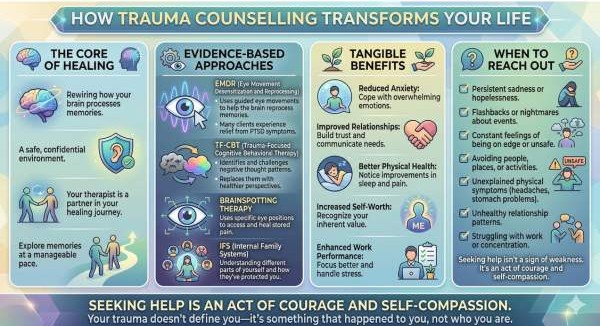
You might be wondering: “Can talking really help with something this painful?” The answer is a resounding yes. Trauma counselling isn’t just about talking—it’s about rewiring how your brain processes traumatic memories and developing practical tools to manage your symptoms.
Creating a Safe Space to Heal
The foundation of effective trauma therapy is establishing a safe, confidential environment where you feel truly heard and understood. Your trauma therapist in Singapore becomes a partner in your healing journey, helping you explore painful memories at a pace that feels manageable for you.
Evidence-Based Therapeutic Approaches
Professional trauma counsellors use scientifically proven methods tailored to your specific needs:
Eye Movement Desensitization and Reprocessing (EMDR): This powerful technique helps your brain reprocess traumatic memories through guided eye movements. Many clients experience significant relief from PTSD symptoms after just a few EMDR sessions.
Trauma-Focused Cognitive Behavioral Therapy (TF-CBT): This approach helps you identify and challenge negative thought patterns connected to your trauma, replacing them with healthier perspectives.
Brainspotting Therapy: By identifying specific eye positions that correspond to trauma stored in the brain, this technique helps you access and heal deeply held emotional pain.
Internal Family Systems (IFS): Particularly effective for complex trauma, IFS helps you understand different parts of yourself and how they’ve been trying to protect you.
The Tangible Benefits You’ll Experience
When you commit to trauma counselling, you’re investing in real, measurable improvements:
Reduced Anxiety and Stress: You’ll learn effective coping strategies to manage overwhelming emotions, leading to greater calm in daily life.
Improved Relationships: As you heal, you’ll find it easier to trust others, communicate your needs, and form meaningful connections.
Better Sleep and Physical Health: Many trauma survivors notice improvements in sleep quality, chronic pain, and overall physical wellbeing as they process their experiences.
Increased Self-Worth: Trauma often leaves us feeling damaged or unworthy. Counselling helps you reclaim your sense of self and recognize your inherent value.
Enhanced Work Performance: When you’re not constantly battling trauma symptoms, you can focus better, be more productive, and handle workplace stress more effectively.
Recognizing When You Need Professional Support
Sometimes it’s hard to know whether you should seek help. Consider reaching out to a trauma counsellor if you’re experiencing:
- Persistent sadness or hopelessness that isn’t improving
- Flashbacks or nightmares about past events
- Difficulty forming or maintaining relationships
- Constant feelings of being on edge or unsafe
- Avoiding people, places, or activities that trigger memories
- Unexplained physical symptoms like headaches or stomach problems
- Finding yourself repeatedly in unhealthy relationship patterns
- Struggling with work performance or concentration
Remember: seeking help isn’t a sign of weakness. It’s an act of courage and self-compassion.
What to Expect in Your Healing Journey
Healing from trauma isn’t linear, and it doesn’t happen overnight. Some people experience relief within a few months, while others need longer-term support—especially those dealing with chronic or complex trauma. Your journey is unique, and a good trauma therapist will meet you exactly where you are.
At Insightful Counselling, we use a personalized, trauma-informed approach that honors your individual experiences and healing timeline. We’ll work together to develop coping techniques that fit your lifestyle, process difficult memories in a safe way, and help you build resilience for the future.
Taking the First Step Forward

If you’re reading this and recognizing yourself in these descriptions, know that help is available. You don’t have to carry this burden alone. At Insightful Counselling, we provide specialized trauma therapy in Singapore to support you in moving from surviving to thriving.
Your trauma doesn’t define you—it’s something that happened to you, not who you are. With the right support, healing is not only possible but probable. Many clients at Insightful Counselling have walked this path before you and found their way back to peace, confidence, and joy.
Ready to begin your healing journey? Contact Insightful Counselling today to learn how trauma therapy can help you reclaim your life. Your future self will thank you for taking this brave step.
References:
- Bernice, A. L., Allyson, C. C., & Lindsay, C. K. (2014). The Frequency and Impact of Exposure to Potentially Traumatic Events Over the Life Course. Journal of Clinical Psychology, 70(9), 844–856. https://pmc.ncbi.nlm.nih.gov/articles/PMC3958943/
- Subramaniam, M., Abdin, E., Seow, E., et al. (2020). Prevalence, socio-demographic correlates and associations of adverse childhood experiences with mental illnesses: Results from the Singapore Mental Health Study. Child Abuse & Neglect, 103, 104447. https://pubmed.ncbi.nlm.nih.gov/32171798/